Follow the Water: Seven Southeast Asian Rivers and the Stories They Carry
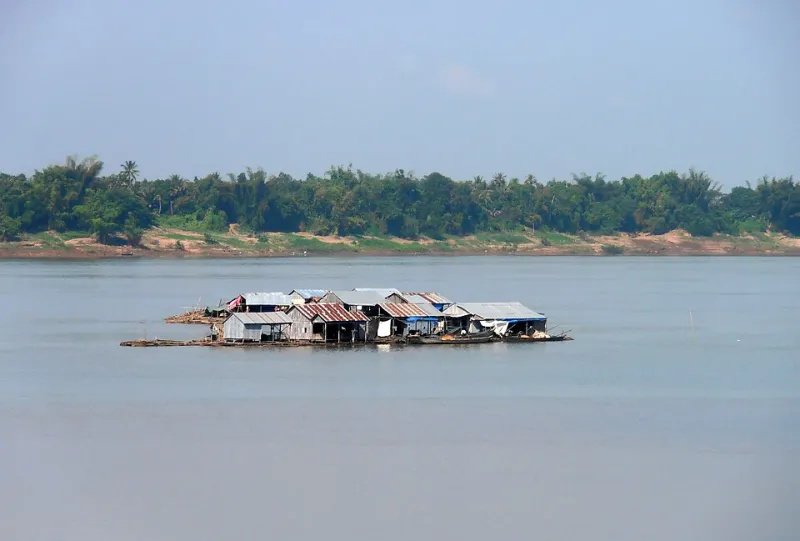
Photo: Wikirictor, CC BY-SA 4.0, via Wikimedia Commons
If you want to understand Southeast Asia, skip the landmarks for a day and find a river. Rivers here are not scenery. They are roads, kitchens, sewers, shrines, and arguments. They carry sediment and memory in roughly equal measure, and they are honest in a way that tourism rarely is. What follows is not a ranking. It is a reading list, written in water — seven rivers, each with one way to meet it and one thing to eat while you do.
1. The Mekong: The River That Feeds
The Mekong is the region's great shared address, running from the Tibetan plateau through China, Myanmar, Laos, Thailand, Cambodia, and Vietnam. It feeds fisheries, rice fields, and a whole culture of floating commerce. Read it as a river of trade and migration, not just a scenic backdrop.
Do this: go to Cai Rang floating market outside Can Tho, Vietnam, just after sunrise, with a small boat operator rather than a large tour group. Taste this: a bowl of hu tieu, ideally handed to you from another boat.
2. The Irrawaddy: Memory in Slow Motion
Myanmar's great river moves at the pace of a country thinking. It passes monasteries, oil fields, and villages that have watched empires come and go. Read it as a river of memory — and of a present that is complicated. Travel in Myanmar is affected by the political situation, so check current advisories and think carefully about whether and how your visit supports the people you hope to meet.
Do this: take a slow local ferry or walk the riverbank at Mingun, north of Mandalay. Taste this: mohinga, the fish noodle soup that carries the river in its broth.
3. The Chao Phraya: The Commuter's River
Bangkok's river is a working corridor disguised as a postcard. Ferries packed with office workers pass temple spires and condominium towers in the same frame. Read it as a river of daily routine, where devotion and commuting share a hull.
Do this: ride the orange-flag commuter boat, get off at Tha Tien, and walk to Wat Arun. Taste this: boat noodles from a small shop near the pier — rich, dark, and served in a portion that seems like a mistake until you order a second.
4. The Red River: Hanoi's Working Edge
Hanoi's Red River is silty, industrial, and often ignored by visitors who stay inside the old quarter. That is a mistake. Read it as a river of labor — barges, sand dredgers, and fishing nets strung under a bridge that has survived wars.
Do this: walk the Long Bien Bridge at dawn, when motorbikes and produce carts stream across the old steel spans. Taste this: pho, obviously, but try a bowl from a market stall near the river rather than a hotel restaurant.
5. The Brantas: Java's Forgotten Empire
East Java's Brantas river watered the Majapahit empire, and its basin is still dotted with temple ruins, rice terraces, and sugar mills. Read it as a river of history that most travelers skip on their way to Bali.
Do this: rent a bicycle in Trowulan and ride between the scattered brick temples and village lanes. Taste this: rawon, the dark beef soup colored with keluak nut, a dish that tastes like the region's deep past.
6. The Musi: Palembang's River City
Palembang was built on the Musi, and for centuries it was a capital of the Srivijaya empire and a hub of maritime trade. Read it as a river of arrival — the place where goods, faiths, and people from across the sea first touched Sumatra.
Do this: take a river taxi under the Ampera Bridge at dusk, when the water turns orange and the city's lights come on. Taste this: pempek, the chewy fish cake served with a dark, sweet-sour sauce.
7. The Kapuas: Borneo's Long Highway
In West Kalimantan, the Kapuas is less a river than a road. Longboats carry people, produce, and building materials to communities that may be hours or days from the nearest paved road. Read it as a river of distance — and of the Dayak and Malay communities who have learned to measure time in bends and currents.
Do this: take a slow boat from Sintang with a local guide, and plan for a journey measured in hours rather than minutes. Taste this: bubur pedas, a savory rice porridge that shows up at Ramadan and family gatherings.
A Practical Note
River travel runs on local time. Schedules shift with water levels, weather, and demand, so build in slack and carry small bills. Use locally owned operators, ask before photographing people, and be aware that some rivers pass through areas where tourism is politically sensitive. The water will tell you a lot, but the people who live beside it will tell you more.