The House That Belongs to the Women: Notes from the Minangkabau Highlands
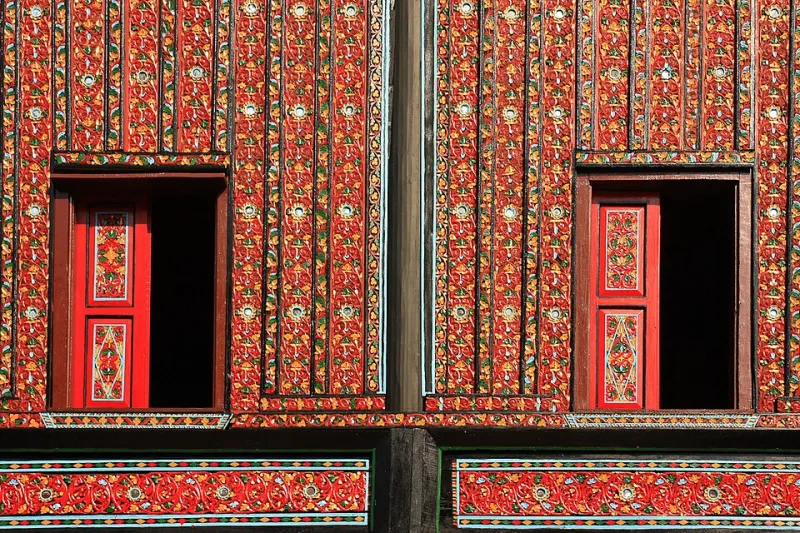
Photo: https://www.flickr.com/people/buitenzorger, CC BY-SA 2.0, via Wikimedia Commons
The bus from Padang climbs for two hours through a green so saturated it looks painted, and then the road opens onto Bukittinggi, a town perched in the highlands with a clock tower, a canyon, and air cool enough to make you reach for a jacket. I had come to West Sumatra to understand a single idea: that in Minangkabau society, land and houses pass through women. What I found was more complicated and more generous than any explanation I had read.
Arriving in the Highlands
Bukittinggi is a good base, but the villages are the point. I stayed in a homestay outside Batusangkar, in a house with a tin roof and a front porch where three generations took turns sitting. My host, a woman in her sixties named Uni, introduced me to her mother, her daughter, and her granddaughter in that order, then pointed at the rice fields below the house and said, in English she had learned from a nephew, 'That is ours. It goes to the girls.'
The House With Horns
The rumah gadang is the signature building of the Minangkabau highlands — a long wooden house raised on stilts, with a roof that sweeps upward at both ends into pointed horns. The horns are often read as buffalo horns, a nod to a founding myth about a water buffalo contest. But the house is not just architecture. It is a family ledger. The number of rooms, the carved panels, the age of the beams — all of it records a lineage that follows the mother's line.
Uni walked me through her family house, which was older than she was and smelled of woodsmoke and dried chilies. Photographs of ancestors hung on the wall, most of them women. The house belonged collectively to the women of the clan, she explained, and could not simply be sold by any one person. That single rule explained a great deal about how the village looked: stable, dense, and full of houses that had not moved in a hundred years.
Land That Follows the Daughters
Minangkabau is often described as the world's largest matrilineal society, and the shorthand is useful, if a little too tidy. Clan identity, surnames, and ancestral property pass from mother to daughter. Men hold important roles as brothers, uncles, and community leaders, and many leave home for years at a time in a tradition called merantau — migrating to other parts of Indonesia to study, trade, or work. That mobility is part of the system, not a contradiction of it.
What struck me was how matter-of-fact the inheritance was. No one performed it for me. It came up over lunch, in the way Uni's daughter talked about which field she would plant next season, or the way a neighbor stopped by to ask Uni's mother about a boundary line. The land followed the daughters, and the daughters followed the rice calendar. Islam and adat — customary law — sit alongside each other here in ways that outsiders often flatten. Minangkabau society is matrilineal and Muslim, and the two systems negotiate in daily life rather than compete in a textbook.
The Kitchen Is the Archive
If the rumah gadang is the ledger, the kitchen is the archive. Uni's kitchen was a low-ceilinged room at the back of the house where fish dried on a rack, shallots hung in a basket, and a pot of gulai simmered for what seemed like most of the afternoon. She taught me to pound chilies for sambal with a stone mortar, and to taste the rendang not for heat but for the moment when the coconut milk turns from liquid to dark, glossy paste.
Meals were communal and slightly relentless. There was always an extra plate, always someone arriving. I ate sate padang in town, a dendeng balado that made my eyes water, and a bowl of young jackfruit curry that I still think about. The hospitality was not performative. It was structural — the same logic that keeps land in the family keeps the table open.
How to Visit With Care
West Sumatra is not Bali, and that is the point. Travelers who come looking for a resort version of Indonesia may be disappointed; travelers who come curious will find one of the most distinctive cultures in Southeast Asia.
Go with questions, not assumptions. Homestays and small guesthouses are widely available around Bukittinggi, Batusangkar, and the Harau Valley. Dress modestly in villages, ask before entering a rumah gadang or photographing a family, and learn a few words of Indonesian or Minangkabau — even a clumsy terima kasih goes a long way. Hire local guides, eat where families eat, and do not treat matrilineal custom as a curiosity to be confirmed. It is a living system, and it has better things to do than explain itself to visitors.
What I Took Home
On my last morning, Uni's granddaughter walked me to the road with a plastic bag of rice from the family field. I had asked a lot of questions, and she had answered most of them. What stayed with me was not the horned roof or the neatly explained rules of inheritance, but the way the house and the land and the food all pointed in the same direction: toward the women who kept them. I left with rice, a recipe I have not mastered, and a clearer sense that land is never just land.